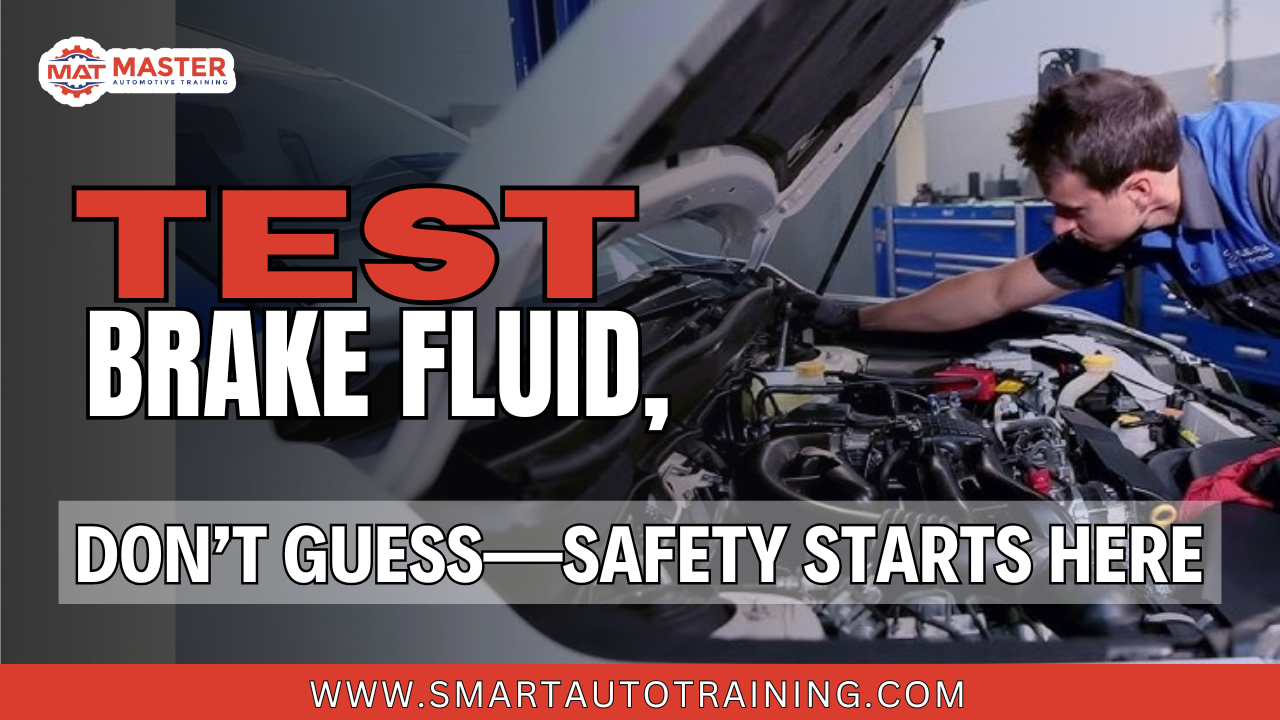
When it comes to vehicle safety, the braking system is non-negotiable. While brake pads and rotors often get the spotlight, there’s one part many people overlook—brake fluid.
If you’re training to become a technician or already in the field, knowing how to test brake fluid is critical. It’s not just a small detail—it’s a major part of modern diagnostics.
Why Brake Fluid Deserves Attention
First of all, brake fluid is hygroscopic. That means it absorbs moisture from the air over time. This moisture may seem harmless, but it can:
- Lower the fluid’s boiling point
- Cause a soft or spongy brake pedal
- Increase stopping distance
- Lead to brake failure in extreme cases
Additionally, moisture inside the system can lead to internal corrosion. This can damage expensive parts like calipers, master cylinders, and ABS units. That’s why testing brake fluid is a must, not just a suggestion.
What Exactly Is a Brake Fluid Tester?
A brake fluid tester is a simple diagnostic tool. It tells you whether the fluid is still safe or if it’s time for a change.
Most testers work like this:
- Dip the tester into the fluid reservoir
- It checks for contamination
- The results show on LEDs or a digital screen
This quick test gives technicians reliable data. With it, they can recommend brake fluid replacement confidently and accurately.
Two Common Types of Brake Fluid Testers
There are two main tools used in the field:
1. Electronic Conductivity Testers
These detect moisture based on how well the fluid conducts electricity. The more moisture in the fluid, the higher the conductivity.
2. Boiling Point Testers
These heat up a small sample of the fluid. If the boiling point is too low, the fluid is waterlogged and unsafe to use.
Both testers are valuable. Each helps technicians make better, faster decisions during inspections.
Why Every Technician Should Use One
Here’s the bottom line—a brake fluid tester builds trust. Instead of guessing or relying on mileage, you’re showing the customer real data. That kind of professionalism stands out.
For students and new techs, using this tool also shows you’re thinking like a modern technician. You’re not just replacing parts—you’re diagnosing with precision.
This skill helps you build a solid reputation early in your career.
Pro Tip from Smart Auto Training
Always test brake fluid during brake inspections. Don’t wait for a problem. Prevent it before it starts.
Final Thoughts: Don’t Skip the Test
In conclusion, brake fluid testing should be standard during any brake service. It only takes a minute, but it can prevent major safety issues.
At Smart Auto Training, we teach more than just theory. We focus on real-world diagnostics, tool usage, and communication skills that make a difference in the shop.
✅ Want to level up your diagnostic game?
✅ Ready to work like a pro?
📞 Call us at 909-539-0114
🌐 Or visit SmartAutoTraining.com to enroll in our next class.