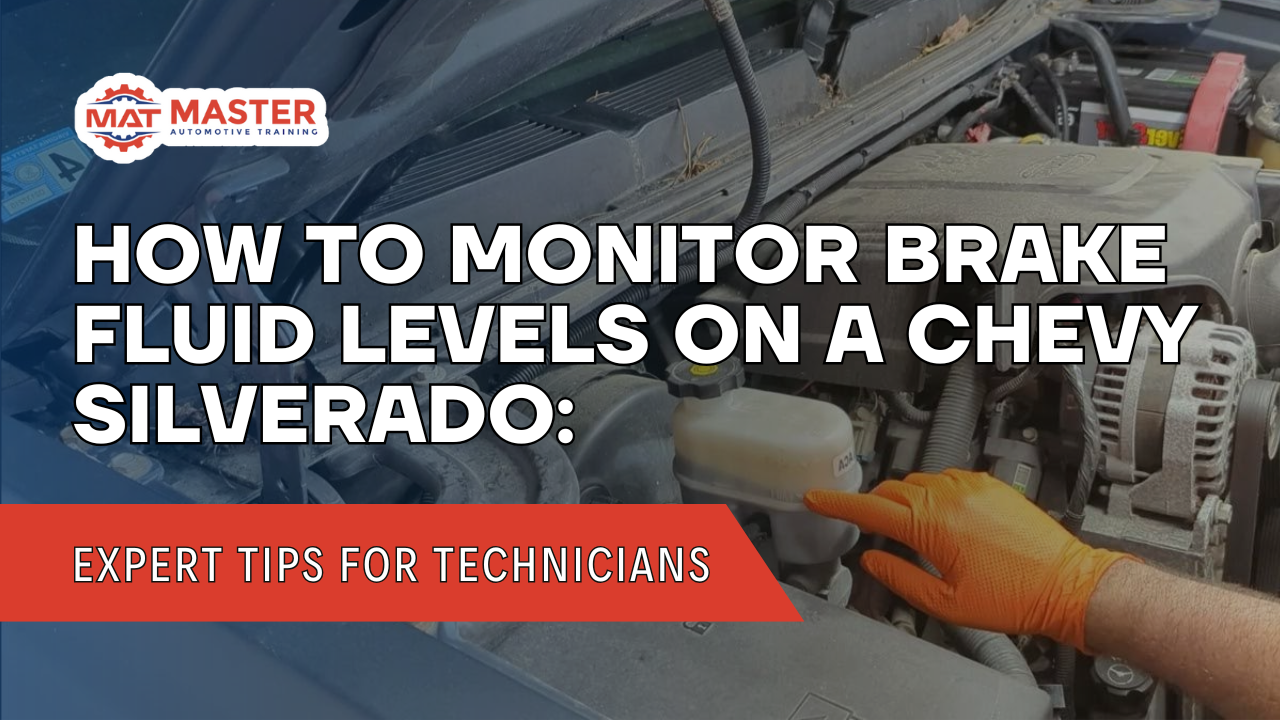
Maintaining proper brake fluid levels is crucial for the safety and performance of any Chevy Silverado. As a technician, knowing how to monitor and address low fluid levels can prevent serious brake system failures and build lasting customer trust.
Why Keeping an Eye on Brake Fluid Is Critical
In Chevy Silverado trucks, low brake fluid often signals deeper problems. It could indicate worn brake pads, leaking brake lines, or other brake system issues that compromise stopping power. Therefore, regular fluid inspections help ensure reliable performance and safer driving conditions.
At Smart Auto Training, we emphasize how preventive checks like this protect both the vehicle and your reputation as a technician.
Step-by-Step Guide to Brake Fluid Inspections
-
Inspect the Brake Fluid Reservoir
First, open the hood and locate the brake fluid reservoir. Check for cracks, loose caps, or other visible damage that could allow fluid loss.
-
Measure the Brake Fluid Level
Next, compare the current fluid level to the “MIN” and “MAX” indicators marked on the reservoir. If the fluid is low, add the manufacturer-recommended brake fluid carefully to avoid contamination.
-
Search for Brake System Leaks
If topping off the fluid becomes a frequent need, a hidden leak may exist. Inspect the brake hoses, master cylinder, and calipers for wet spots or drips.
-
Check for Brake Pad Wear
Often, low brake fluid is a byproduct of worn brake pads. As pads wear down, the caliper pistons extend further, using more brake fluid. Always assess pad thickness and replace if necessary.
Why Brake Fluid Checks Matter for Auto Shops
Routine brake inspections should be part of every maintenance package. Identifying low brake fluid or related issues early prevents costly repairs, boosts shop efficiency, and elevates customer satisfaction. Training your technicians on these simple but vital steps leads to safer vehicles and repeat business.
Ready to sharpen your automotive skills even further?
Contact Smart Auto Training at 909-539-0114 or visit www.smartautotraining.com to explore our hands-on technician training programs!